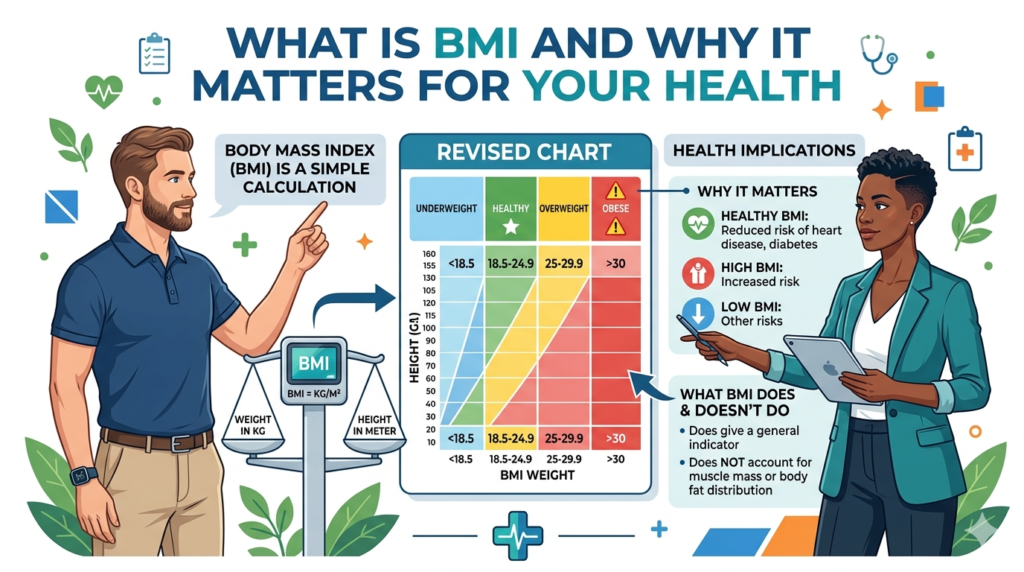
Body Mass Index (BMI) is a globally recognized health measurement used in medical, nutritional, and fitness assessments to evaluate whether an individual has a healthy body weight relative to their height. It is one of the most commonly used screening tools for identifying potential weight-related health risks, including underweight, overweight, and obesity conditions.
Although BMI does not directly measure body fat percentage or muscle mass, it provides a reliable baseline indicator for understanding general body composition trends at a population level. Healthcare professionals, fitness trainers, and nutritionists often use BMI as an initial step in designing personalized diet, exercise, and weight management plans.
You can quickly calculate your BMI using CalcHub’s accurate and easy-to-use BMI Calculator, which provides instant classification based on standard health guidelines.
What is Body Mass Index (BMI)?
Body Mass Index (BMI) is a mathematical formula that compares a person’s weight to their height to determine whether they fall within a healthy weight range.
BMI Formula:
BMI = weight (kg) ÷ height (m²)
For example, if a person weighs 70 kg and is 1.75 meters tall:
BMI = 70 ÷ (1.75 × 1.75) = 22.86
This result falls within the normal BMI range, which is generally considered a healthy weight category.
Standard BMI Classification and Health Categories
BMI values are divided into internationally accepted health ranges:
- Below 18.5: Underweight (may indicate low body fat or nutritional deficiency)
- 18.5 – 24.9: Normal weight (healthy BMI range)
- 25.0 – 29.9: Overweight (increased risk of metabolic health issues)
- 30 and above: Obesity (higher risk of chronic diseases)
These categories help identify potential health risks early and support preventive healthcare strategies.
Why BMI Matters for Your Health
BMI is important because it serves as an early screening tool for detecting weight-related health risks. Maintaining a healthy BMI is associated with better metabolic function, improved cardiovascular health, and reduced risk of chronic diseases.
A consistently high or low BMI may indicate underlying health concerns that should be addressed through lifestyle modifications such as nutrition planning, physical activity, and medical consultation when necessary.
Health Risks Associated with Abnormal BMI
Low or high BMI levels may increase the risk of several health conditions, including:
- Cardiovascular diseases: Increased strain on the heart and blood vessels
- Type 2 diabetes: Linked with insulin resistance and excess body fat
- High blood pressure (hypertension): Often associated with overweight and obesity
- Joint and mobility issues: Excess weight can stress bones and joints
- Weakened immunity or nutrient deficiency: Common in underweight individuals
How BMI Is Used in Health and Fitness
BMI is widely used in clinical healthcare, sports science, and fitness training programs as a baseline measurement for:
- Assessing general health status
- Identifying weight-related risk factors
- Designing calorie-based diet plans (calorie deficit or surplus)
- Monitoring progress in weight loss or weight gain programs
- Evaluating long-term metabolic health trends
However, BMI is most effective when combined with other health indicators such as waist circumference, body fat percentage, and lifestyle habits.
How to Use CalcHub BMI Calculator
CalcHub provides a fast and accurate BMI calculation tool designed for both beginners and fitness enthusiasts.
- Enter your weight in kilograms or pounds.
- Enter your height in centimeters, meters, or inches.
- Click on the Calculate button.
- Receive instant BMI results along with health category classification.
The tool helps users track weight trends and understand whether they are moving toward a healthier BMI range over time.
Tips to Maintain a Healthy BMI
Maintaining a balanced BMI requires consistency in lifestyle habits, especially in diet and physical activity.
- Follow a balanced diet with proper macronutrient intake (protein, carbohydrates, fats)
- Engage in regular physical activity such as walking, cardio, or strength training
- Monitor your weight and BMI regularly using digital tools
- Avoid extreme dieting; focus on sustainable calorie balance
- Maintain proper sleep and hydration levels for metabolic stability
Using a BMI Calculator regularly can help you identify patterns and adjust your lifestyle before serious health issues develop.
Limitations of BMI You Should Know
While BMI is a useful screening tool, it has certain limitations. It does not differentiate between muscle mass and fat mass, which means athletes or highly muscular individuals may have a higher BMI despite having low body fat.
For a complete health assessment, BMI should be used alongside additional measurements such as body fat percentage, waist-to-hip ratio, and metabolic health indicators.
Frequently Asked Questions (FAQs)
Is BMI a reliable indicator of overall health?
BMI is a useful general screening tool but not a complete health diagnostic. It should be interpreted alongside other health metrics.
How often should I check my BMI?
Checking BMI once a month or quarterly is recommended for tracking long-term weight and health trends.
Can BMI differ for athletes and bodybuilders?
Yes. Athletes with high muscle mass may have a higher BMI even if their body fat percentage is low.
Understanding your BMI is the first step toward better health awareness. Use CalcHub’s free BMI Calculator to monitor your weight status and take control of your long-term health, fitness, and wellness journey.