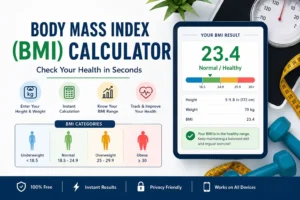
Body Mass Index (BMI) is a clinically recognized health screening metric used worldwide to evaluate whether an individual has a healthy body weight relative to height. It is widely used in preventive healthcare, fitness planning, and medical nutrition assessments to identify potential risks associated with being underweight, overweight, or obese.
For users focusing on weight management, fat loss planning, or metabolic health improvement, BMI is often the first indicator used before building a structured diet or fitness program. You can instantly calculate and track your BMI using CalcHub’s online BMI Calculator, designed for fast, accurate, and real-time monitoring of body weight classification.
Medical BMI Classification and Healthy Weight Standards
BMI categories are used in clinical and fitness settings to evaluate general health risk levels:
- 18.5 – 24.9: Healthy weight range (optimal metabolic balance)
- Below 18.5: Underweight (possible nutritional deficiency or low calorie intake)
- 25.0 – 29.9: Overweight (increased risk of metabolic and cardiovascular conditions)
- 30+: Obesity (higher risk category requiring structured weight management)
Maintaining a healthy BMI range is associated with improved metabolic efficiency, hormonal balance, cardiovascular health, and energy regulation.
How Long Does It Take to Improve BMI? (Weight Loss & Weight Gain Timeline)
The timeline for BMI improvement depends on calorie balance, basal metabolic rate (BMR), physical activity, and adherence to a structured nutrition plan:
- 4–12 weeks: Early changes in weight, water balance, and BMI shift (initial fat loss or weight gain phase)
- 12–24 weeks: Sustainable BMI correction with visible changes in body composition
Professionals in fitness and clinical nutrition recommend focusing on sustainable fat loss or lean mass gain rather than rapid weight fluctuation for long-term metabolic health.
How to Improve BMI If You Are Underweight (Healthy Weight Gain Strategy)
1. Calorie Surplus Through Nutrient-Dense Foods
To increase BMI safely, focus on a controlled calorie surplus using high-density nutrition sources such as nuts, seeds, dairy products, whole grains, bananas, oats, eggs, olive oil, and lean proteins. This supports healthy weight gain without excessive fat accumulation.
2. Strength Training for Lean Muscle Mass Development
Resistance training is essential for improving body composition. It increases muscle mass, improves metabolism, and supports long-term healthy weight gain rather than fat-only increase.
3. Frequent Meal Strategy for Metabolic Support
Eating 5–6 smaller meals daily helps maintain a steady calorie intake and supports muscle recovery and growth, especially when combined with physical training.
4. BMI Tracking for Progress Optimization
Use the BMI Calculator online weekly to monitor weight gain progress and ensure you remain within a healthy BMI trajectory.
How to Improve BMI If You Are Overweight (Fat Loss & Metabolic Reset Strategy)
1. Calorie Deficit for Fat Loss
Reducing daily calorie intake below maintenance level is the foundation of BMI reduction. Replace high-calorie processed foods with whole foods including vegetables, lean protein, legumes, fruits, and complex carbohydrates.
2. Cardio and Fat-Burning Exercise Routine
Regular physical activity such as brisk walking, running, cycling, swimming, or HIIT improves fat oxidation and supports healthy weight loss.
3. High-Fiber Diet for Appetite Control
Fiber-rich foods improve satiety, reduce cravings, and stabilize blood sugar levels, which helps in long-term weight management and BMI reduction.
4. Portion Control and Behavioral Nutrition
Mindful eating and portion control are critical for sustainable fat loss. Even healthy foods can contribute to weight gain if consumed in excess.
5. Monthly BMI Monitoring for Weight Loss Tracking
Regular tracking using a BMI Calculator helps measure progress in weight loss programs and supports data-driven fitness decisions.
BMI, Metabolic Health, and Exercise Science Insights
Scientific research in exercise physiology and metabolic health indicates that combining aerobic training and resistance training produces the most effective results for BMI improvement. This dual approach supports fat reduction, muscle preservation, and improved insulin sensitivity.
In modern fitness and clinical weight management programs, BMI is often used alongside additional metrics such as body fat percentage, waist-to-hip ratio, and metabolic rate for more accurate health evaluation.
Limitations of BMI in Body Composition Analysis
While BMI is widely used in healthcare and fitness industries, it does not differentiate between fat mass and lean muscle mass. This means individuals with high muscle density may have a higher BMI without having excess body fat.
For this reason, BMI should be combined with other assessments such as body fat analysis, waist circumference measurement, and metabolic health indicators for a complete evaluation.
Healthy Weight Range Reference (BMI-Based Estimation)
- 5’0”: 45 – 61 kg (healthy weight zone)
- 5’4”: 50 – 68 kg
- 5’8”: 55 – 75 kg
- 6’0”: 60 – 82 kg
Note: Ideal body weight may vary based on muscle mass, gender, age, and overall metabolic rate.
Frequently Asked Questions About BMI and Weight Management
Is BMI enough to measure body fat and fitness level?
No. BMI is a screening tool and does not measure body fat percentage or muscle mass. It should be used alongside other health indicators.
What is the best BMI range for long-term health?
A BMI between 18.5 and 24.9 is generally associated with lower metabolic and cardiovascular risk factors.
Can I improve BMI with diet alone?
Diet plays a major role, but combining nutrition with physical activity provides faster, more sustainable, and clinically healthier results.
Start tracking your weight and metabolic health today using CalcHub’s free BMI Calculator online and take control of your fitness, nutrition, and long-term health outcomes.